Andy González Hübner-Pettersson

made with <3 in pty

portfolio / archive / personal system

projects

Selected engineering work in real-time collaboration, distributed infrastructure, and storage-engine design.

Each case study summarizes the architecture, implementation, validation strategy, and measurable technical results.

01

collaborative systems

flagship project

SyncPad

03

permission levels

owner / editor / viewer

A production-oriented collaborative rich-text editor with durable document state, multi-layer authorization, and real-time comments.
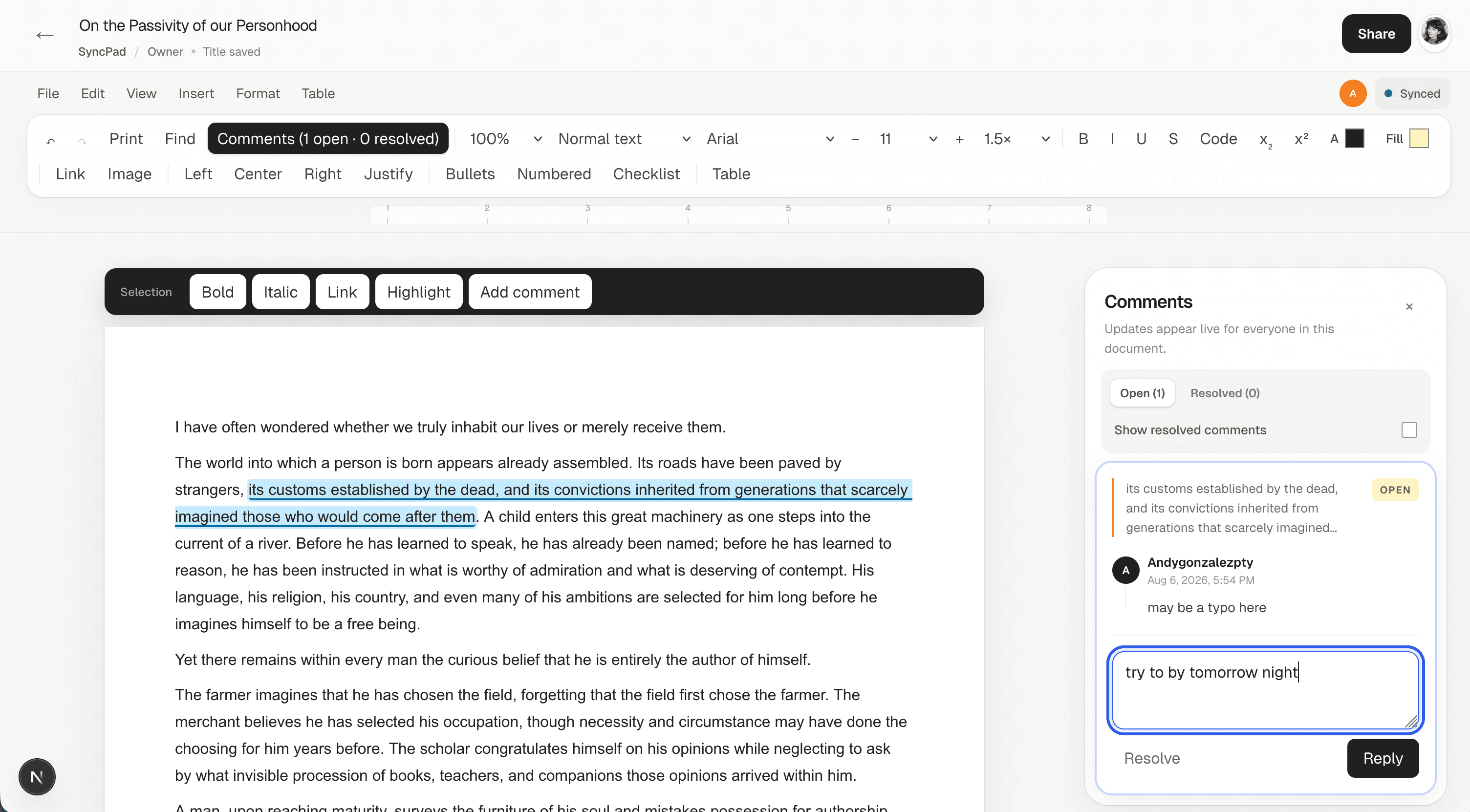
SyncPad collaborative document editor interface
Collaborative editor interfacescreenshot 01

architecture

  1. Next.js client renders the dashboard and editor, connects Tiptap to Yjs, and manages permission-aware interface states
  2. Spring Boot API owns document CRUD, sharing, authorization, comment persistence, and Flyway migrations
  3. Hocuspocus service authorizes WebSocket sessions and synchronizes Yjs document and awareness state
  4. PostgreSQL stores documents, permissions, comments, and collaborative state; Redis supports transient coordination

key implementation details

  • Tiptap and Yjs provide conflict-free rich-text editing, presence, synchronization state, and reconnection behavior
  • Owner, editor, and viewer permissions are enforced independently by the REST API and collaboration service
  • Inline comment threads support replies, resolution, reopening, filtering, and real-time updates
  • The dashboard supports document CRUD, invitations, sharing controls, and permission-revocation handling
  • Frontend, collaboration-service, backend, Testcontainers, Flyway, and Playwright checks run through CI

built with

Next.js / React / TypeScript / TipTap / Yjs / Hocuspocus / Spring Boot / PostgreSQL / Redis / Clerk / Docker / Playwright
02

distributed infrastructure

Distributed Rate Limiter

263,826

successful checks

zero failures under load

A distributed API gateway that enforces shared request quotas across horizontally scaled Go instances using Redis-backed token buckets.

Distributed Rate Limiter Grafana dashboard
Gateway telemetry and Grafana dashboardscreenshot 01

architecture

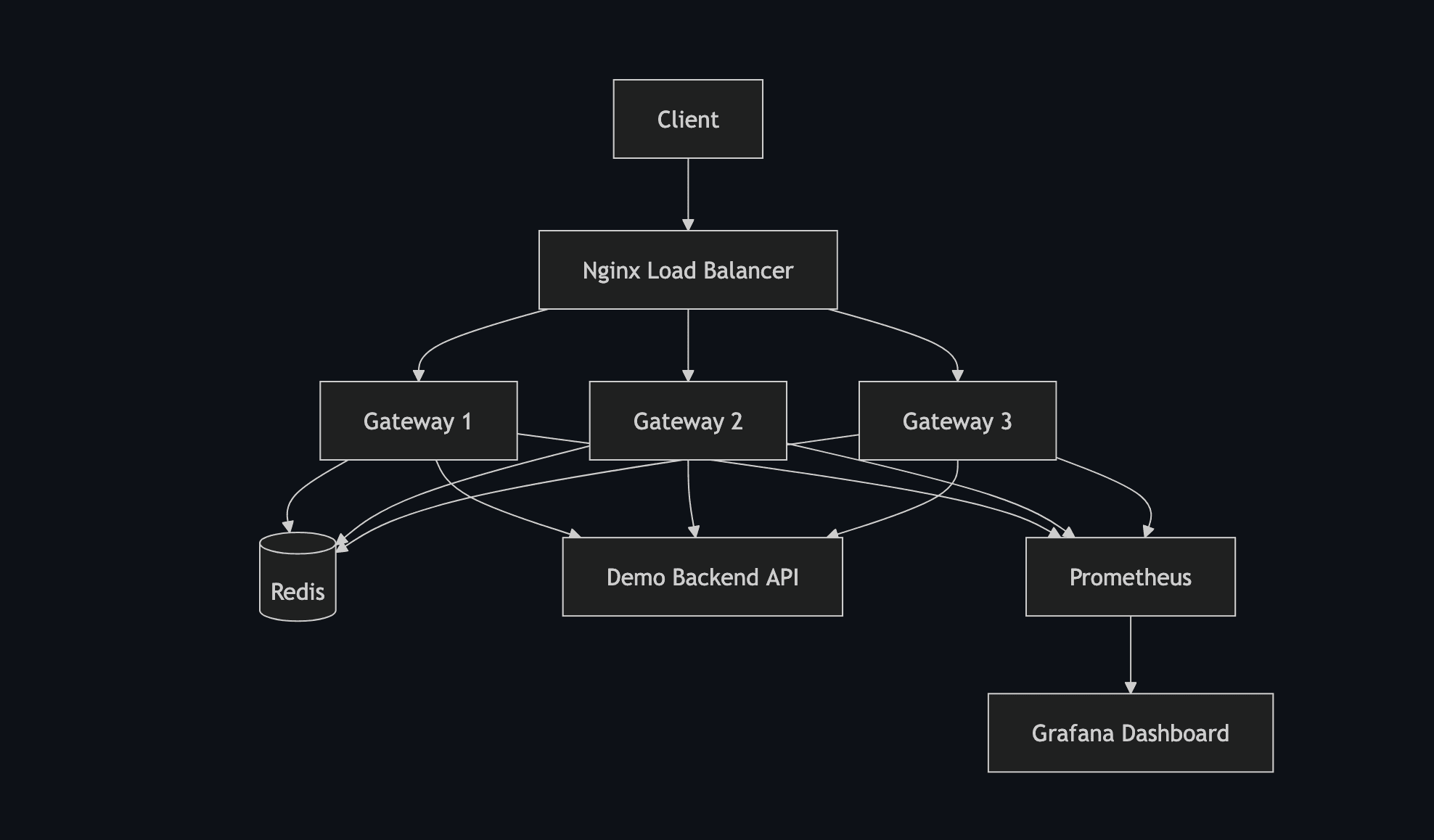
  1. Nginx distributes requests across three stateless Go gateway instances using round-robin load balancing
  2. Each gateway identifies the client, selects a route policy, and proxies accepted requests with httputil.ReverseProxy
  3. Redis stores global bucket state; Lua performs each read, refill, decision, and update atomically
  4. Prometheus collects request, rejection, Redis-error, and latency metrics for Grafana visualization

key implementation details

  • Atomic Redis Lua scripts prevent race conditions while refilling, decrementing, and persisting shared token buckets
  • Client quotas use the X-API-Key header when present and fall back to IP-based identification
  • Route-specific policies define independent capacities and refill rates for default, search, and admin endpoints
  • Configurable fail-open and fail-closed modes make the Redis availability tradeoff explicit
  • Prometheus metrics, Grafana dashboards, k6 correctness tests, and Docker smoke checks cover operational behavior

built with

Go / Redis / Redis Lua / Nginx / Docker Compose / Prometheus / Grafana / k6 / GitHub Actions

03

storage engine

FastKV

>100k

operations / second

measured benchmark throughput

A high-performance, Redis-inspired key-value store implementing concurrent networking, persistence, expiration, and bounded-memory behavior in Go.

architecture

  1. Concurrent connection handlers parse TCP commands and route read, write, and snapshot operations
  2. An RWMutex-protected in-memory store manages key access, TTL state, and configurable LRU eviction
  3. Mutations are appended to the write-ahead log before they are applied to memory
  4. Startup recovery loads the latest snapshot, replays the WAL, removes expired keys, and then accepts traffic

key implementation details

  • TCP protocol supports PING, SET, GET, DEL, EXPIRE, TTL, DBSIZE, STATS, SAVE, QUIT, and EXIT
  • TTL values use absolute expiration timestamps and a background worker removes expired keys
  • Configurable WAL sync policies expose durability and write-throughput tradeoffs
  • Snapshot creation compacts persisted state and truncates the write-ahead log
  • End-to-end TCP recovery tests, Docker builds, benchmarks, and GitHub Actions validate the system

built with

Go / TCP / Docker / GitHub Actions